
Year 10 History Trip to the Battlefields of the First World War (9 – 11 February)
Day 1 by Arthur Turner
On the first day we all arrived at school at 3:40am to catch the coach to the Eurotunnel. We were all tired undoubtedly from the early start so many of us slept or made small talk with the people next to us. We arrived at the Eurotunnel at around 7 in the morning and it was about an hour or so journey on the train, so most of us played games or chatted. We reached France at 8ish where we then drove from there to a truck stop on the way to Belgium where some of us bought breakfast, snacks, and souvenirs.
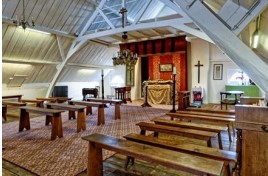
After that, we all got back on the bus and drove straight to Belgium, Ypres. From here we walked to the shops where we bought lunch and anything else we needed. Next, we visited a museum called Talbot House in Poperinge. Talbot House is a living museum, preserving the space where soldiers used to come and spend their leave living “normal” lives again to help them take their minds off the War.
This included playing croquet, watching shows and performances and sitting around and talking to other soldiers. Talbot House included many rooms for leisure, as well as a chapel at the top of the house where soldiers could sit and pray. After we visited the museum, we went to see some execution cells where those soldiers that deserted waited to meet there death as was the punishment for deserting.
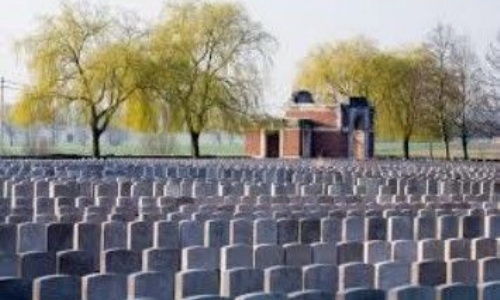
Finally, we took the coach to see Lijssenthoek Military Cemetery, which is one of the largest cemeteries of the Ypres’ salient. During the War it had been a field hospital but now there is a sea of headstones. There was about 50 rows, with100-150 headstones in a row, and a big memorial in the middle to respect those not identified when found. After this we travelled back to the hostel where we had dinner, unpacked and slept the night.
Day 2 by Corey Bosworth
The second day of our trip was the longest and the most activity packed day. First, we woke up early to walk to the centre of Ypres to go the Flanders Field Museum. This is one of the biggest war museums in the world and it accounted for so many different experiences from all parts of the war and made you reflect on what ordinary people, not just soldiers, went through for the war effort. We took around 1 and a half hours in here exploring the wide-range of exhibits which were very interesting, and then we got some free-time to wander the city centre of Ypres to discover the different cultures. Once we had finished this, we met with a tour guide who was lovely and seemed very knowledgeable about the history of the area. The first stop we went to with her was the Essex Farm cemetery which was a large British cemetery but also had some old British medical bunkers where soldiers would go to straight from the battlefield after an injury. We learnt about how these bunkers worked, only one small part of a very complicated system, which overall would help to win the War for the allies.
Now our next stop was a bonus stop, called the Yorkshire Trenches, and here we saw some remnants of the British front-line trenches. Next of all, we took a trip to the largest German mass grave on the western front. It was called Langemarck Military Cemetery, and it contained 25,000 German soldiers in one mass grave as well as many others in individual graves. It is places like this that provide perspective, as individual sacrifices and efforts can often go unnoticed, although many gave up their lives. A sad story from here was that visiting German soldiers believed that some respectful tourists would not want to know more about their country’s perspective, as they might be considered as responsible for starting the War and being an enemy even over a hundred years since the end of the War.
Furthermore, we visited Tyne Cot cemetery, the largest individual British cemetery. There were over 50,000 named graves here, where every single man died for only a few meters of land gained. Whilst standing at the top of the hill, overlooking the cemetery, it really makes you think these brave men deserved more respect and notice. As a result, this was one of my favourite places to visit because it educates you on the horrific impacts of War. Finally, to finish off this day we attended the daily remembrance ceremony at the Menin Gate. Although only being roughly 5 minutes long, we stood in silence as a collective group of people, to pay respect to those who fought for our freedom. This also shows the appreciation that the local people have towards to these soldiers, even after all this time.
Overall, this was my favourite day of the trip as I learnt so much more about the First World War and the different battles and the front lines. However, I think this day had a small feeling of sadness as it really made you contemplate about everyone involved.
Day 3 by Macy Bundock
On Wednesday, the final day of our trip, we had an early start as we were leaving Ypres, heading for France. Our hostel had provided us with a packed breakfast and lunch. On the way, we picked up our tour guide who, throughout the day, showed us around some of the most famous sites of the Somme.
Our first destination was the Lochnagar crater. The crater was created from British Royal Engineers detonating a massive underground mine beneath German lines on the 1st July 1916, the first day of the bloodiest battle. To this day the crater has been preserved and used as a memorial of the fallen. We didn’t stop here for long, but everyone spent their time reading the information posts scattered around the crater.
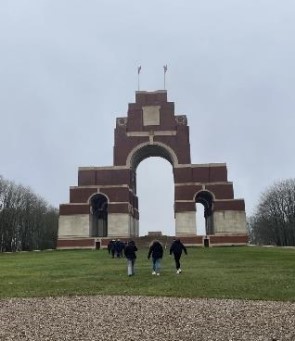
The next stop was Thiepval memorial, which is the largest British memorial, dedicated to 72,000 missing British and South African soldiers. Visiting this memorial was significant to me as my great-great grandad fought and died in the battle of the Somme and his name is marked on one of the piers of the memorial, which I had locations to. I was extremely grateful to find his name and send photos back home to my family. Every name was packed onto 16 individual piers, organised by a soldiers’ regiment and rank. The names were endless. It would take hours to read every single one.
The last visit, before returning home, was the Newfoundland Park memorial. Our tour guide had told us it’s the only memorial park where a complete first World War trench system has been preserved. So, as we were walking along a path on No Man’s Land, our guide would tell us which trenches were German, British or allied front lines. I was surprised by how peaceful the park seemed. Most of the other memorial sites or battlefields we visited were surrounded by industrial buildings and factories, where life had moved on, but this park was covered in wildlife and surrounded by forests.
After a tour of the park, we all got back on the coach again and dropped off the tour guide before heading home. Everyone, especially me, was tired, hungry and couldn’t wait to stop for food but it was worth it. We arrived in Bourne just about on time.
The trip was a great experience for our class to understand the horrors of the First World War on a deeper level and apply the knowledge and understanding into our lessons. Most importantly, no matter where we went on this trip, we were exposed to the futility of war and the senseless loss of life, as well as the bravery of the individuals who experienced it.